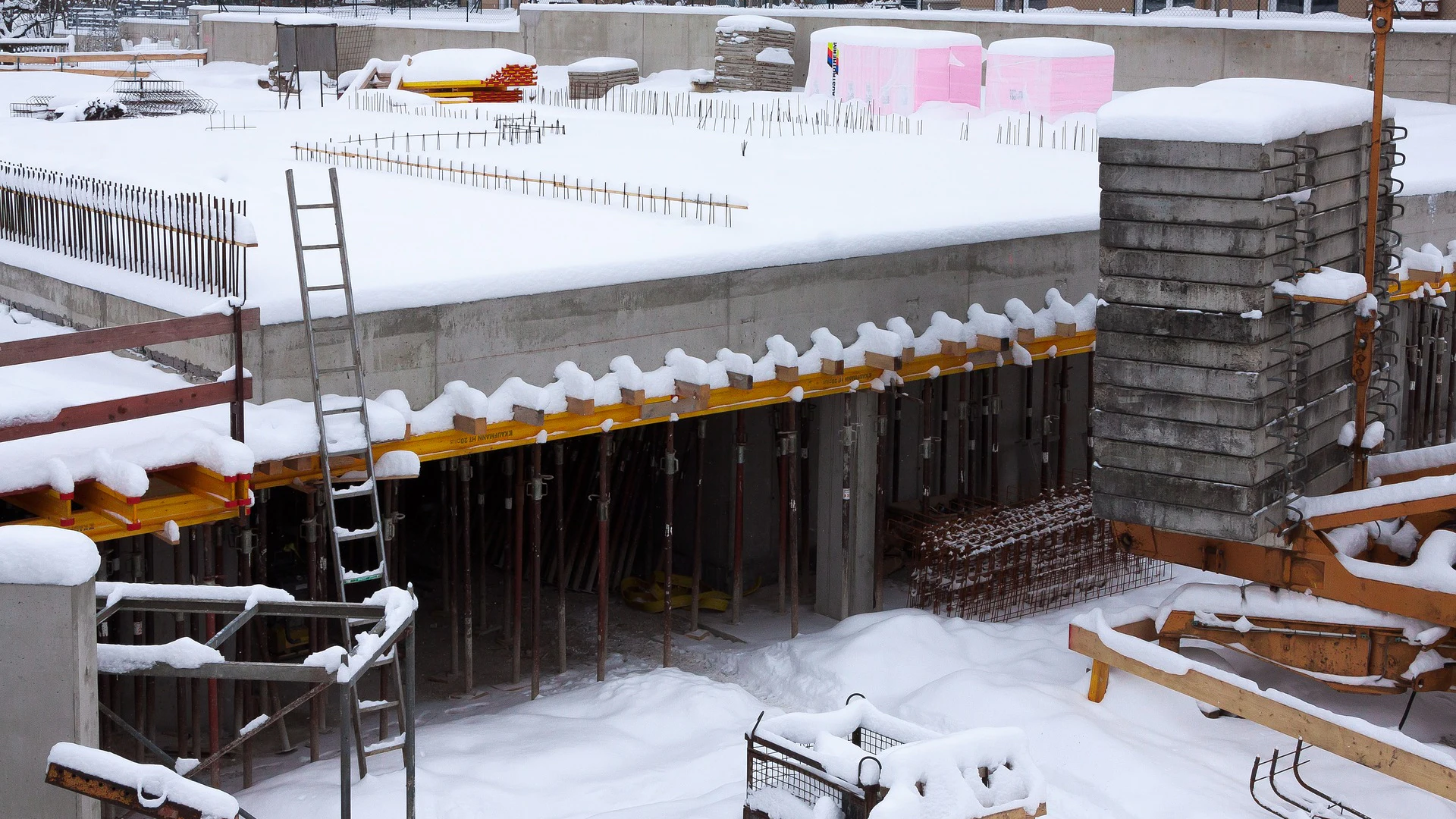
Cold weather does not stop construction, but it changes what is safe, what cures correctly, and what pace is realistic. Schedules that ignore winter physics slip in February, not in the snowstorm itself.
1. Concrete and mortar temperatures
Hydration slows below certain thresholds; admixtures, heated water, insulated formwork, or temporary enclosures may be required. Follow supplier data sheets and log temperatures—liability and strength live in those notes.
2. Frozen ground and excavation
Frozen soils bulk harder, risk trench instability, and can hide water lenses when they thaw. Sequencing drainage and backfill before deep freeze windows often pays for itself.
3. Enclosure and temporary heat
Wind breaks, tarps, and heated tents protect workers and wet trades—but manage combustion safety and moisture venting so you do not steam-damage fresh finishes.
4. Daylight and logistics
Shorter days reduce productive hours; ice on access routes slows deliveries. Build float for critical-path outdoor tasks.
5. Client expectations
Transparent programme updates with weather contingencies prevent “why did we stop?” conflicts. Winter is manageable when it is priced and planned, not wished away.
Closing. Winter construction is mostly about protecting materials and people while chemistry and soils catch up to the calendar. Respect that, and the schedule stays honest.